From the movie "Chariots of Fire" (1981):
"I am forever in pursuit and I don't even know what I'm chasing."
-Harold Abrahams

"I know God made me for a purpose. But He also made me fast. And when I run, I feel His pleasure."
-Eric Liddell

Wednesday, October 23, 2013

PHILIPPINE THEATER: Tanghalang Pilipino aims to reach audience outside MM on its 27th season

By Cora Llamas
Published by The Philippine Daily Inquirer July 13 2013
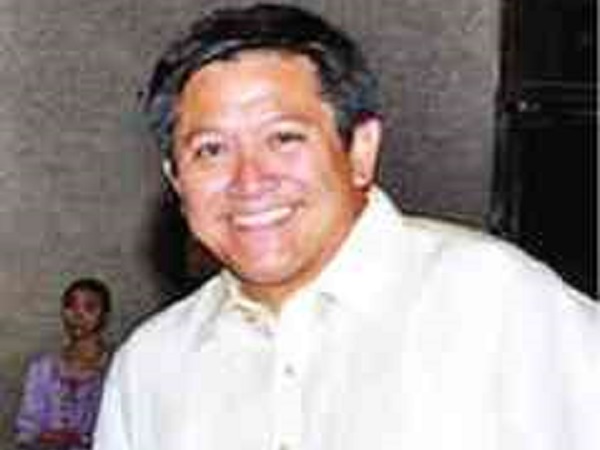
NEW TP president Jolly Reyes Gomez
His assuming the reins as Tanghalang Pilipino’s (TP) new president is a homecoming of sorts for José Luis “Jolly” Reyes Gomez. A businessman who oversees many companies as well as a scion of the family that owns Aristocrat Restaurant, the man says he has always loved the dramatic arts (he was present during TP’s founding 27 years ago) and would like to see its resurgence, especially in the Philippines.

He has a chance to do just that in his new position, which Gomez describes simply as “to do the business side.” Too often, he says, undermanned theater companies have their creative heads do their operations, financial and marketing aspects as well, in the process crippling their Muse.
“If Nanding [Josef, TP’s artistic director] runs the day-to-day operations, that will restrict his art. My job is to do the business side and allow Nanding to create and continue to create.”

One of the strategies Gomez wants to do this year to increase TP’s audience development, and thereby ticket sales and revenues, is to bring its productions outside Metro Manila to surrounding provinces. This, however, would mean a partnership with the local government units, especially when it comes to building theater venues with the appropriate lighting and sound system.

Gomez says many auditoriums in the provinces are equipped for basketball games, school pageants and other activities that do not consider the requirements of a bona fide theater production. Still, the man who has been a commissioner of the Philippines Sports Commission since 2010 remains optimistic.

“Kapag magpapagawa ka ng basketball stadium sa probinsiya na may aircon, that’s P25 million. But a good theater [for drama] will not cost more than P5 million. We want to build more intimate theaters across the country with 100-200 seats. The LGUs have to understand that [theater] can be profitable and earn funds.

“There are so many schools that have auditoriums but [are not built for] theater. The reason they don’t invest in it is that there is no content,” he says.

Fatherhood
This is where theater companies like TP can come in with their new slate of productions every year. And, given Gomez’s new vision of growing a new audience among young people, perhaps it is almost appropriate that fatherhood would be TP’s theme in its 27th season this year. As Josef puts it, “Fathers figure as the symbol and shapers in human society.”

CASTOF TP’s latest production, “Sandosenang Sapatos,” opening tonight and running until July 21 at CCP’s Tanghalang Huseng Batute
The timeless tale of a shoemaker father’s undying love for his child with a physical disability can be seen in “Sandosenang Sapatos,” directed by Tuxs Rutaquio and written by playwright Layeta Bucoy, the recent winner of Philstage’s Gawad Buhay! for Best Original Script for the one-act play “Doc Resureccion, Gagamutin ang Bayan.”

“Sandosenang Sapatos” is a musical, with Noel Cabangon and Jed Balsamo as music composer and arranger, respectively. It opens tonight and will run until July 21 at the Tanghalang Batute at the Cultural Center of the Philippines (CCP).

Centerpiece
A centerpiece of TP’s new season is “San Andres B.,” an opera that will celebrate the 150th year of Andres Bonifacio, the original father of the Philippine revolution. The opera boasts of a libretto written by National Artist for Literature Virgilio Almario, direction by Floy Quintos and music by Chino Toledo, with a live orchestra and professional opera singers and actors.
“San Andres B.” will run Nov. 29-Dec. 8 at Tanghalang Aurelio Tolentino (Little Theater).

The linkages to paternal influence may not be as obvious in “Der Kaufman,” an interesting rendition of William Shakespeare’s tragi-comedy “The Merchant of Venice.” Playwright Rody Vera builds on an initial translation of the play by the late theater giant and National Artist Rolando Tinio. Tuxs Rutaquio again directs. “Der Kaufman” will run Sept. 27-Oct. 13 at Tanghalang Batute.

Powerhouse creative team
Another father rears its image in the next play, and this time, it is the other extreme of a cruel and unjust one. Nick Joaquin’s “Mga Ama, Mga Anak”—based on Joaquin’s short story “Three Generations,” about a bitter, manipulative patriarch whose iron hand almost destroys the lives of his children and grandchildren—is given a new theatrical lease on life by a powerhouse creative team consisting of playwright Pete Lacaba and director Joel Lamangan. It will run Feb. 21-March 9, 2014, at the Tanghalang Tolentino.

TP is also restaging the critically acclaimed “Ibalong,” a musical reimagining of the Bicolano epic written by Vera and directed (again) by Rutaquio, with music by Carol Bello. “Ibalong: The Musical” will run Aug. 30-Sept. 15 at the Tanghalang Tolentino.

Timelessness and relevance
Gomez says the timelessness and relevance of the themes in these productions, along with their creative design, can bring in the audiences if they were staged outside the metro. To generate buzz in the areas prior to the staging, scenes from the various productions could be performed in public places like the malls.

TP’s new president admits some of his audience-development plans are “ambitious,” but remains steadfast in his belief that it can be done.
Here in Manila, it’s already entertainment overload,” he says. “We should be bringing [the productions] out.”

Call TP at 8321125 local 1620-1621 for further details.


THEATER REVIEW: Blood, grief, mayhem - and the audience as the deciders of fate - in 'Ang Oresteyas'

By Cora Llamas
Published in The Philippine Daily Inquirer July 20 2013

Paul Jake Paule as Orestes (alternating with Nicolo Magno). “Ang Oresteyas,” co-directed by Ricky Abad and Myra Beltran, presents a rough, gritty, unforgiving world perpetually awash in colors of black and red. CHRISTINE CHUNG
In the original Greek classic “Oresteia,” written by Aeschylus, the madness in the House of Atreus ends on a happy note. But in Tanghalang Ateneo’s version, “Ang Oresteyas,” the conclusion is more ambiguous; the play places the protagonist’s fate in the hands of the live theater audience, and ends with a question mark.

The resolution, or lack of it, is not a simple or trivial one. The original plunged into the themes of justice and retribution, the sins of matricide versus that of marital infidelity, the rivalry that can exist between paternal and maternal loyalties, and ultimately redemption that is won only after much grief, woe, soul-searching and (let’s face it) the intervention of celestial forces like the gods of Olympus.

This TA version, reimagined for today’s audience by writer Jay Crisostomo IV, removes that final act that would have woven all those themes into one darkness-into-light tapestry, and simply paints this theatrical canvas as an unending cycle of blood and violence.

Reluctant avenger
In both versions, the buck stops with Orestes, the reluctant avenging son compelled to kill his mother Clytemnestra for the murder of her husband and his father King Agamemnon. This conscience-stricken prince is the last line of heirs in a blood-soaked throne that would have put Shakespeare’s Macbeth to shame.

The House of Atreus’ founding father, Tantalus, killed his own son Pelops and tried to feed his cooked flesh to the Olympian gods for no other reason than to test their supposed omniscience. Orestes’ grandfather and his grand-uncle, Atreus and Thyestes, murdered their step-brother Chrysippus. This fragile brotherly bond broke when, taking a page out of the family history, Atreus had almost every nephew killed and tricked Thyestes into eating them.

Not surprisingly, Thyestes’ only surviving son, Aegisthus, has an ax to grind against his cousin. He plots to destroy Agamemnon in collusion with Clytemnestra, who in turn wants Agamemnon dead for his having sacrificed their eldest daughter Iphigenia to the gods as an offering to win the war against the Trojans. It is a price their family would never recover from.

It is a world that no sane man would want to enter—and by removing the otherworldly elements like a radiant Apollo and a level-headed Artemis, “Ang Oresteyas” brings us immediately down to an earth that is rough, gritty and unforgiving. A cast reduced to wearing faded robes and/or muddy rags performs on a stage perpetually awash in colors of black and red.
Even the victory of war brings no good news. Ruined crops have brought famine and poverty.  Instead of gold and jewelry as his spoils of war, Agamemnon brings a bag of the skulls of his dead soldiers. His ship also brings his mistress, the Trojan prophetess Cassandra, an indirect slap against the face of his already seething queen.

Fluidity
The production is co-directed by Ricky Abad and Myra Beltran. Abad brings his expertise as a socio-anthropologist professor to the fore in the play’s subtle allusions to blood oaths, political dynasties and a greedy, indifferent national leadership that could care less for its people. Balancing him is the fluidity brought to the stage by Beltran’s choreography, which keeps the cast members perpetually moving, their changing facial expressions and lithe physical movements preventing the darkness of the reworked material to dissolve into a quagmire.

The predominantly young cast lives up to the challenge, which is one of this production’s main strengths. Their performances are uniformly and consistently affecting. The usually faceless Chorus emerges as the beating tired heart of the nation, mirroring its sorrows, disappointments, fear and pain.

Opaline Santos’ doomed Cassandra is utterly paranoid, devastatingly vulnerable and oddly sympathetic. Veteran thespian Frances Makil-Ignacio makes her Clytemnestra multi-layered, showing the pathos of an abandoned mother and a scorned woman who still loves the husband she has just bludgeoned with an ax.
Agamemnon (Brian Matthew Sy) and Aegisthus (Joseph dela Cruz) are embattled soldiers who cannot show and yet cannot totally conceal their emotional turmoil. Miela Sayo sheds her natural, classy demeanor to play Elektra as a totally believable former spoiled princess who lives like a whore in the sewers.
In his brief turn as the titular character Orestes, Nicolo Magno’s strong, charismatic presence wins the audience’s sympathy, as the former hope of the nation reduced to a wreck of guilt and doubt by his matricide.

Soaring energy
The performances and soaring energy of the cast, the clipped pace and the brooding atmosphere compensate for some weaknesses of the script. Crisostomo’s reimagining sometimes works, and sometimes it doesn’t. While Elektra’s accidental viewing of Agamemnon’s copulation with Cassandra and his murder reminds us where Jung derived his Elektra complex, for instance, the reunion of Agamemnon and Clytemnestra in this limbo-like heaven serves no purpose except as a morbid memo that their hapless children are left to fend for their own.

Neither was it clear how the young children Orestes and Elektra were driven into exile; were the soldiers who spirited them friendly forces loyal to Agamemnon or bungling instruments ordered by Aegisthus and Clytemnestra?

Playing up a hidden gay romance between Orestes and Pleiades was ultimately counter-productive; once the focus of the audience was cemented on that particular aspect, Pleaides’ role as conscience and guide was ignored, especially in the parts where it mattered most.

At the end, we are left with the proverbial beating of drums to determine Orestes’ fate.  Following the original material, the jury is deadlocked, and Abad apparently leaves the decision in the hands of the audience like a reality TV show. It is an honest attempt to be relevant—but one that is loaded, unintentional though it may be.

With the redemptive parts of the original removed, and the blood-and-shadow aspects overplayed, what other choice would any audience go for?

“Ang Oresteyas” runs until July 27 at Rizal Mini Theater, Ateneo de Manila University, Quezon City. Contact Tanghalang Ateneo at +63917-6309097.

Tuesday, October 22, 2013

THEATER REVIEW: Dulaang UP's 'Adarna' - a familiar legend suddenly rendered unfamiliar

By Cora Llamas
Published in the Philippine Daily Inquirer, August 3 2013

The young hero Don Juan facing off against a giant.What kept the audience’s attention was how the familiar cliches and tropes of the folk tale were rendered with clever sleight-of-hand tricks.
“Adarna,” the recent Dulaang UP production of the well-known Filipino folk tale that was adapted for the stage by playwright Vlad Gonzales and directed by José Estrella, turned out to be more of a coming-of-age story of its young princely hero Don Juan (Fitz Bitaña). Perhaps it would have been more accurate to retitle it to something akin to the seemingly impossible labors of Hercules, or the wondrous journey of Odysseus.
The titular bird and its main participation in the storyline were only played out in the first act. By the second act, it just hovered in the background as a mystical companion and/or fountain of wisdom that helped keep the play moving along by pointing our hero in the right direction.

More fanciful
The familiar tale of the kind but sick king Don Fernando (Greg de Leon), who sends out his three sons and heirs apparent to find the magical bird for its healing powers, is done by the first half. The second half is an even longer and more fanciful quest which takes Don Juan all of seven years not just to find the bird, but to explore a far greater world beyond his kingdom of Berbanya, a realm filled with magic and mayhem.

And he takes the audience with him along for the ride. Along the way, he matures, secures a bride (or several candidates for the position), and in a sense becomes more ready, emotionally and intellectually, to assume the throne.
Pure fantasy

This was a recipe for a romp, and the production and its young cast made no bones about it. Except for fleeting appearances here and there, the Adarna was rarely seen and, truth to tell, was hardly missed. In this two-hour-and-a-half theatrical narrative, Don Juan would bring down a one-eyed giant, defeat a slithering snake, swim to the depths of a murky sea, and venture deep, deep down into the center of the earth.
The mythical Adarna bird reimagined as seven maidens with golden voices and colorful plumage
This was fantasy at its purest and, along with the beauty of a script spoken like poetry with background music to match, one could just, in a sense, “sit back and enjoy the show.” This “Adarna” was meant to be a spectacle, smartly written and with humor in all the right places, if slightly overlong.
What did keep the audience’s attention was how the familiar cliches and tropes were rendered with clever sleight-of-hand tricks. There were many of them, actually, and a second viewing seemed to be called for just to fully appreciate the techniques applied. Nor was it only a matter of the production designer having been given a bigger budget to put in more bells and whistles, or the equivalent of falling chandeliers.

Simple innovations
The innovations could be simple, but in their own quiet way stunning. The proverbial drop into a thousand-feet hole using only a rope was implemented with a ball of light on the stage and a couple of actors performing as doubles. Duplication of bodies was again used, this time with half-a-dozen look-alikes wearing the same costume, to mirror either a magical creature’s omnipresence or faster-than-light travel. The battle with the giant was made possible by interplaying the actor playing him on one side of the stage with lighting effects that simulated another actor’s overgrown shadow on the other.

To further make the play appeal and reach out to its young audience, current idioms and catchphrases were interspersed with the classical Tagalog script and, more often than not, had the crowd roaring.
“Adarna” paid slight homage to local and foreign pop culture in some of its devices. Don Juan’s victory against the giant echoed that now classic scene in the first Indiana Jones movie where the swashbuckling hero’s surprise tactic felled in a second the fearsome swordsman before him.

Missing its mark
The play started with a bang and on a high note, and it could have ended the same way. Unfortunately, and this is where it missed its mark, “Adarna’s” ending was thematically opposite to what had largely transpired before it. To avert a political crisis that occurs in the aftermath of Don Juan’s victorious return to his father’s kingdom, Don Fernando elevates him to heir apparent.

The play left it at that, leaving an ominous tone as the hero now prepared to confront his new role. But this ending opened a whole new can of worms which “Adarna” did not address. Will the two resentful brothers not respond with another form of treachery, if not outright rebellion? Why this sudden brooding atmosphere that seemed to question Don Juan’s ability to rule his kingdom?

The change in tone was jarring and baffling. The early parts of the play made no pretensions about the youthful, feel-good and occasionally comic approach to the original material. Even the two treacherous brothers had their funny moments. Without the proper creative and emotional preparation that could have laid the foundation for this sudden and inexplicable downbeat moment, the audience was left groping in the end, intellectually and emotionally.

Consistency could have made “Adarna” soar. Instead, it left questions even the wise mythical creature at its center would have found difficult to answer.


PHILIPPINE THEATER: "I am 63. I can say what I like." A lion of the stage contemplates his winter.

By Cora Llamas
Published in The Philippine Daily Inquirer August 31 2013


The reprimands and raves from his colleagues have died down, and to Felix “Nonon” Padilla’s mind, he has said his final piece.

But his words are difficult to forget, let alone dismiss. They were said as part of his acceptance speech after receiving the Natatanging Gawad Buhay! Lifetime Achievement Award from the Philippine Legitimate Stage Artists Group, Inc. last June.
With his usual wit and candor, the man who founded Tanghalang Pilipino, CCP’s resident theater company, and ran it for 16 years, spoke bluntly about an issue that many silently felt had been crippling the growth of Philippine theater: political patronage interfering with or blocking actual creative choices. 

He named names and minced no words: “Much energy and saliva have been expelled toward organizing the CCP art institution into a well-oiled machine, subject to the whims and caprices of political appointees, who should have done better… than dabble in gossip in the boardrooms.”

Many who listened to or read about his speech wanted to know: After years of fighting it out by working within the system, then resigning in protest over what he believed was an injustice by management, and spending the years after quietly directing productions for other companies, why finally air out his sentiments publicly and turn an act of celebration into a soapbox?

Advocacy
“It was an advocacy,” Padilla replies quietly, shrugging aside the accusations that he gave in to submerged feelings of resentment and bitterness. “They did not like the idea that I made [the acceptance speech] into a platform. It’s like a campaign for people to be aware that the arts cannot be subjected to politics. In governments and organizations in countries like France and England, the arts programs are not arbitrarily handled by politicians but are left to artists and designers who will make them flower.

“People have said I am simply bitter,” he says. “I am trying to set it straight. For me, [the speech] is a historical document where I had to set things straight for the record.”

Perhaps there is no better time than the present, or, to be more specific, the night he was finally recognized for his contributions to the dramatic arts.

“I am 63,” says Padilla. “My career technically is over. I can say what I like, and the people who have done this are not [in CCP] anymore.”

This September, Padilla’s new production opens—“Lorenzo,” a contemporary opera about the Filipino martyr and saint, written by Paul Dumol to the music of Ryan Cayabyab, and produced by acclaimed film actor Christopher de Leon’s new production company, the Green Wings Entertainment Network, Inc.

He still dreams of directing a “Macbeth,” “Hamlet,” or the full nine hours of the Greek epic “Oresteia.” The winter that he thinks is encroaching will not stop him from doing what he loves to do: “This is my life,” he says. And for his art, he will say what he feels needs to be said.

PHILIPPINE THEATER: Trumpets returns with splashy new musical 'The Bluebird of Happiness'

By Cora Llamas
Published in The Philippine Daily Inquirer Sept. 21, 2013

ntentional or not, Trumpets’ big musicals start with or are triggered by a journey.
“Joseph the Dreamer” had its titular Biblical hero literally being dragged from his homeland into enslavement in Egypt. The lovestruck little mermaid of the play that bears the same name forsook her heritage in the oceans to find her destiny on solid land. “The Lion, the Witch, and the Wardrobe” transported its four child protagonists from war-torn England into the magical landscape of Narnia.

Now the Christian theater company is at it again, this time with a musical adaptation of Belgian playwright and philosopher Maurice Maeterlinck’s (1862-1949) classic play, “The Bluebird of Happiness.”

In the original 1908 version which was staged in six acts at the Moscow Art Theater, Tyltyl and Mytyl, the children of a poor woodcutter, are guided by a fairy into a quest around the world to search for the bluebird of happiness, which apparently could grant them their hearts’ desires and give them everlasting peace and joy. This search soon leads them into many adventures, some fun-filled, others dangerous, while their little band brings in allies and friends who help them fight against their enemies.


Carla Guevara-Laforteza
Like all past big-budgeted Trumpets productions, this one will be energized by a huge cast (in “Bluebird’s” case, a 50-member ensemble), engaging musical numbers, state-of-the-art production design and a family-oriented message.

Time-tested tradition
All the Trumpets productions mentioned above were also coming-of-age stories where heroes and heroines learned their lessons and brought out the best in themselves. “The Bluebird of Happiness” promises to follow in this time-tested tradition.
“It is about a journey,” says   ‘Bluebird’ director Jaime del Mundo. “Our characters journey to the past, the present and the future. The [musical] shows what they brought to the journey and how it affected them.”

Robbie Zialcita, Anton Posadas, Alessa Zialcita, Lynn Sherman
The original play’s material was replete with symbolism, as Maeterlinck was one of the leaders and pioneers of Europe’s 19th-century Symbolist movement. He believed that truths in spirituality, philosophy, and life could be better conveyed by the use of allegory. This explains why the characters met by the young heroes in the Trumpets adaptation goes by such names as Light (Carla Guevara-Laforteza), Night (Joel Trinidad), and Father Time (Raymond Concepcion).

However, while Trumpets is expected to remain generally faithful to the material, the Filipino audience can expect a more familiar, perhaps homegrown approach that would resonate strongly despite the European trappings. This adaptation has been labeled an original Filipino English-language musical production, with Del Mundo writing the books and lyrics and composer Rony Fortich creating the music.

“The children [in the musical] are stand-ins for us,” says Del Mundo. “We all want happiness now. Others look for it in the past, some look for it in the future, but we truly find it in the present.”

Hard-won truths

Joy Virata and Steve Cadd
These principles may  be familiar to a modern audience, but to Maeterlinck they might have come at a price. Satisfaction, contentment and finding light in a dark situation are the stuff that define pop culture today, but they were hard-won truths in the playwright’s time.

“The Bluebird of Happiness” was written when war clouds were threatening Europe; Hitler’s Nazis would eventually occupy Maeterlinck’s native Belgium. The writer sought exile in Portugal and later the United States, where he never stopped denouncing or writing against the Nazi occupation of Europe.
Poverty, loss, alienation, and repression were not strangers to Maeterlinck, who discussed them repeatedly in his other plays and philosophical tomes. He was awarded the Nobel Prize for Literature in 1911 for his “dramatic works which are distinguished by a wealth of imagination and by a poetic fancy, which reveals, sometimes in the guise of a fairy tale, a deep inspiration …”

Constant themes
Light and darkness are not easy to mix in a family-friendly play like “Bluebird.” Walter Lang’s 1940 cinematic version is best remembered for lead star Shirley Temple’s performance, while the later 1976 movie starring Elizabeth Taylor suffered from miscasting, the dominance of visuals over storytelling, and George Cukor’s lackluster direction.

The aspects that may provide the balance in the Trumpets production are the constant Christian themes of hope and optimism. Del Mundo says, “Trumpets is still a Christian theater company, and we do have Christian elements in our plays.” He refers to some of the lyrics in the musical which refer to the birth of a blessed child and then adds, “The first thought that some people might have about it is the Child Jesus, but it may also refer to the children in the [musical finding] themselves.”
It has taken some time for this musical to find itself as well—approximately 16 years and 10 versions before its world premiere on Sept. 26 at Meralco Theater. Trumpets president and founder Audie Gemora had thought of creating the musical many years back, with colleague and theater stalwart Freddie Santos as the original director. Del Mundo came in later when circumstances saw Santos departing the picture.

Unique production
What made this particular Trumpets production unique for Del Mundo was his writing it solo, sans his usual writing partner Luna Inocian (with whom he co-penned “The Little Mermaid” and “The Lion, the Witch and the Wardrobe”).
By the time “Bluebird” found its wings, the third part of their creative triumvirate, Lito Villareal, was already living in the States, so Fortich would eventually take on the role of composer.

“Luna is scheduled to take on the next Trumpets musical, although I can’t disclose much about it yet,” says Del Mundo.  “When we were starting out writing, we were holding each other’s hand. Now, we have found our individual voices.”
Another thing he is enthused about is the abundance of talent in “Bluebird,” with a new generation of performers getting to work with reliable veterans.  Young artists Alessa Zialcita and Chimmi Kohchet-Chua, who play Mytyl, and Anton Posadas and Guido Gatmaytan, who alternate as Tyltyl, will be performing with Mayen Bustamante-Cadd (Mama Tyl), Lynn Sherman (the pet cat Tylette), Robie Zialcita (the pet dog Tylo), Jennifer Villegas-dela Cruz (Berylune), Joy Virata (Grandma Tyl), and Steve Cadd (Grandpa Tyl).

“It’s all about the pieces falling into place,” Del Mundo.  “Every Trumpets production is a big production. ‘Bluebird’ will be no less.”

“The Bluebird of Happiness”  runs Sept. 26-Oct. 20 at the Meralco Theater. For tickets, call 9014364, 8919999 or www.ticketworld.com.ph.

Monday, October 21, 2013

PHILIPPINE THEATER: Virgin Labfest 9 acknowledges young growing audience for Philippine plays

By Cora Llamas
Published in Interaksyon Lifestyle June 17 2013

Forget the dire predictions and prognosis that original Philippine plays, which means they are written, by Filipino playwrights and directed and produced by Filipino directors and producers, are an endangered species, to be crushed by the behemoths of foreign touring companies and the tried-and-tested glossy Broadway revivals by English-language local theater companies. Not if a small, feisty but steadily thriving cradle of Filipino dramaturgy being nurtured in the hallowed halls of the Cultural Center of the Philippines (CCP) has something to say about it.

The Virgin Labfest, which started as an experiment to encourage local playwrights to create new works and then produce them for a new audience, is now on its ninth year. From June 26 to July 7, a total of ten act one-plays will be staged at the CCP’s Tanghalang Huseng Batute and the Bulwagang Amado Hernandez. Many of the writers are virtual unknowns, but some of the directors are either respected industry veterans (Chris Millado, George de Jesus) or experts who crossed over from another field and are trying their hand in drama (Marlon Rivera).

Regardless of their pedigree, chances are none of these new plays—virgins, as they are called—will be playing into an empty house. Gone are the days when CCP producers had to call family, friends, and colleagues just to fill in vacant seats. Last year, during the 8th season, all of Virgin Labfest’s plays were booked solid a week before opening night – and the halls were filled even during a Manny Pacquiao Sunday.

Mayroon na kaming cult following,” beamed festival director Tuxos Rutaquio during Virgin Labfest 9’s press con.

The cast of 'Kudeta! Kudeta!' by playwright Jimmy Flores with direction by Ariel Yonzon, onstage at the Virgin Labfest on June 26 at 3 p.m. and 8 p.m., and July 6 at 3 p.m. Photo courtesy of Virgin Labfest.
Some of the audience are die-hard fans who had seen a few plays before and stayed on to watch with each coming year. Yet there are also new theater viewers who had been drawn in by word of mouth. Virgin Labfest production manager Nikki Torres describes them: “It’s the indies. This is the yuppie independent market. Sila ang may mga pera, like the ones who work in a call center. They are the ones who are not afraid to try out new plays.”

She also points one interesting fact about the growth of their audience—it flourished though their plays are not the stuff that can be easily marketed to colleges and universities as part of student curricula. “Some of our plays are risqué,” she says.
It does help that many of the well-known theater companies are represented in the Labfest either as actors, directors or playwrights. They already have a built-in hard core theater-viewing fan base that they bring in.

The Virgin Labfest artistic team also enthuses that the increase in numbers can be seen in the number of submissions as well.

In its first year, there were only eight submissions. Torres reminisces wryly, “We had to beg for the writing majors from the Philippine High School for the Arts to join.” That was then. For the 9th season, the Virgin Labfest received 180 submissions.
Theater directors also need no longer be enticed to lend their hand; some of them approach CCP, asking to become part of the festival.

The groundswell of support has also been coming in from the other art-related industries such as film. Torres continues, “Maraming gusto mag-direct o umarte like Gina Alajar, performing for the same rate as [our] very young actors…”

All the plays will be performed in the smaller venues, as the artistic team has good reason for not transferring them to bigger ones like the Tanghalang Aurelio Tolentino. Rutaquio explains, “[Batute is] very experimental and very intimate. Gusto ng audience na malapit na sila [sa pinapanood nila]. May alienating effect kapag malayong-malayo.”

Given its growth, Virgin Labfest continues to explore ways to expand its reach such as encouraging regional theater companies to send in their manuscripts. Plays written in other dialects are accepted as long as they are accompanied by a translation.

CCP Vice President Chris Millado is confident that the steady enthusiastic response that the Virgin Labfest has been receiving from its audience, playwrights, and other artists will continue. It is a call that they cannot ignore. He muses, “It is the opportunity to be part of the birthing of a new work. You have writers, playwrights discussing with actors, actors discussing with directors…the pages could be fleshed together, and everything comes together on opening night with the audience interacting.”

And magic suddenly is created, and the process replicated every year, bringing new audiences, creating fresh streams for new talent to rise, and supporting an industry that is fighting to keep alive.

The cast of 'Ambong Abo' by playwright Em Mendez, directed by Roobak Valle, at the Virgin Labfest on June 28 at 3 p.m. and 8 p.m., July 3 at 3 p.m., and July 5 at 8 p.m. Photo courtesy of Virgin Labfest.
The Virgin Labfest is a joint venture of CCP, Tanghalang Pilipino and the Writers’ Bloc, Inc. in cooperation with the National Commission for Culture and the Arts. This year’s plays include Labfest veterans George de Jesus, Liza Magtoto and Em Mendez with Kapit, Isang Daan and Ambong Abo. Also among the works are Virgin-to-the labfest playwrights Benjamin Pimentel’s Pramoedya, Herlyn Gail Alegre’s Imbisibol, Eljay Castro Deldoc’s Owel, Bernadette Neri’s Pamamanhikan, Jimmy Flores’ Kudeta! Kudeta! and Carlo Vergara’s Kung Paano Ako Naging Leading Lady.

Also included is Dominique La Victoria’s Chipline, the very first labfest play which will be totally in Cebuano. From the 8th Virgin Labfest, Em Mendez’s Unang Regla ni John, Aizel Cabili’s Pagsubli and Guelan Luarca’s Kuneho will be restaged.
Directing the plays are Chris Millado, Marlon Rivera, Chris Matinez, Melvin Lee, Charles Yee, Roobak Valle, JK Anicoche, Law Fajardo, Emman dela Cruz, George de Jesus, Ed Lacson and Ariel Yonzon.

Tickets are priced at P300 with festival passes at P1,200. For further inquiries, please call the CCP Dramatic Arts Division at 832-1125 locals 1606 to 1607, or visit the website at www.culturalcenter.gov.ph.

TURNING POINT (ARTS AND EDUCATION): TSAA: Integrating a progressive arts program in pre-school, K-12

By Cora Llamas
Published in Interaksyon Lifestyle July 8 2013

Theater stalwart Audie Gemora takes up a new challenge as founder of the Talent School
Theater stalwart Audie Gemora takes up a new challenge as founder of the Talent School of Academics and Arts (TSAA). Photo courtesy of TSAA
The Talent School of Academics and Arts (TSAA) is not a learning center that confines its curriculum to art subjects. It does not seek to transform aspiring young ingénues into the next Filipina who makes it big in Broadway (although I suspect it will not quibble if one of its graduates does make it to that limelight). Rather, TSAA is a bona fide educational institution, recognized by the Department of Education, where students from pre-school to eventually the K-12 level study familiar courses like math, science, and history.

What sets it apart, however, is that it uses the arts to unleash the students’ potential, tapping into their creative sides, luring them into enjoying their studies while they learn. And perhaps over the next several years, while the TSAA might graduate its fair share of K-12 students who would go into business, IT, and hospitality management, it might also turn out to be the birthing place of future playwrights, film producers, and musical composers.
TSAA aims to raise students who do not just excel in their academics but are also music, theater, and art smart. Photo courtesy of TSAA.
“This is a school that would develop a child’s right brain and left brain,” says TSAA founder and Philippine theater stalwart Audie Gemora, referring to the two sides of that vital organ that houses a human being’s capabilities in the use of creativity and logical analysis respectively. “It is a non-traditional school that would take care of the academics and the intelligence that come with cognitive learning. There would be subjects like math and social studies. But we also open up the other side of learning, the creative intelligence, the right brain. If we open both the right brain and the left brain, they would complement each other.”

TSAA’s platform is arts integration or using the arts to teach the core subjects. Gemora explains some of the more basic methods, “In learning science, the kids would be asked to create paintings of the planets. We unlock the imagination of the child through storytelling, done in a very dramatic way. Our teachers have to be artistas.”

But these are just baby steps. Artistic integration that starts at the pre-school level continues up to the K-12 level as various artistic fields such as music, the visual arts, and theater are seamlessly integrated into the curriculum that has been fashioned by educators from the University of the Philippines. He describes TSAA’s curriculum as a “progressive arts program, different from the summer workshops and the art classes in the traditional schools.”
Detail of a classroom in TSAA. Photo courtesy of TSAA.
Summer theater art workshops usually teach students basic skills in acting, singing, and production management for a short two months, and these activities will culminate in a recital. Afterwards, the students go back to their respective schools during the usual schoolyear. And in their traditional schools, art classes are usually regarded as an elective or an extra-curricular activity, to be squeezed in while students are learning how to do their algebra or write a formal essay.
In contrast, in TSAA’s curriculum, “from pre-school to high school, we plot out the progression of the art form, and the child follows that.”

Gemora gives us a preview of what a student will encounter as he progresses up the higher levels of education: “We will teach the history of theater. He will learn the different kinds of approach to acting, then he will later on take on musical theater and Shakespeare classics. By the time he reaches high school, he will be learning about original plays, then on to the various forms of theater in Broadway.”

The same happens in music. “The student first learns to sing and play instruments in elementary. By high school, he knows how to read musical notes.”

The core subjects are taught in the morning, and the art classes will be held in the afternoon.

This delicate balance was the combination that Gemora did not know he was searching for. After intensive years of producing plays for TRUMPETS and running workshops for Stages as these companies’ head, he took a hiatus in 2005 and became a fulltime dad to his son, Richard, who was then five years old. It was then that he had a first glimpse at a child’s educational system.

Not long after, he and some parents who felt that something was missing in their children’s curriculum tried putting up their own pre-school. The effort failed but the seed was born. Gemora then established a music academy that would teach the arts, or what the summer arts workshop taught every school break, all year-round. Despite their parents’ initial support, the students soon started dropping off. It was a lesson that was painful but taught Gemora the one thing he needed to proceed to the next level, which is TSAA: “This mixture of arts and academics is the missing thing. Parents will never put their child into a purely artistic school because it will never get them into a profession.”
A sampling of the activities at TSAA. Photo courtesy of TSAA.
But students who can manifest and control their creative sides while remaining grounded on more earthbound disciplines like math and science will rule the world. Gemora points out, “This is the era where companies hire creative thinkers, the ones who can visualize. The computer has opened up a whole new world to them.”

Though a Generation-Xer who was born prior to the birth of the personal computer and the explosion of the internet, Gemora early in life had recognized that he had a grasp of both his creative and business sides. “I am a good leader, entrepreneurial, pretty smart. But I was bad in math. I am a lateral thinker, I am a creative person, I am just wired differently.”

He credits his evolution to a teacher’s forcing him to join a musical production as a high school student in the International School. Something clicked during his initial acting stint. Not long after, Gemora joined Repertory Philippines, became one of its emerging stars, and the rest they say is history.

“I was an average perfoming student, but my grades improved when I started doing theater. Had I not joined musical theater, I would have been a miserable haciendero, watching the crops grow,” he muses. “Education and the arts are connected. You find your specific kind of intelligence then you realize you are not so average after all.”

And now this artist-turned-educator, once known as ‘the prince of Philippine musical theater,’ has the opportunity to pay it forward, leading to the development of a new generation of creative and logical prodigies who just might change the world.

TSAA is accepting enrolees for its SY2013-2014, pre-school to grade 2. Call (+632) 511-0463, (+632) 808-8051, and (+632) 511-6060. E-mail registrar@tsaa.com.ph.